Three for Three
We ran three historical figures through the Scalar Flower instrument. No biography fed in — geometry only. Three times, the field found the exact shape their lives are actually known for. That is not a coincidence you get to wave away, and we're not going to pretend it might be.
A Field Note from Scalar Flower. With computational collaboration by the Hermes agent (Nous Research).
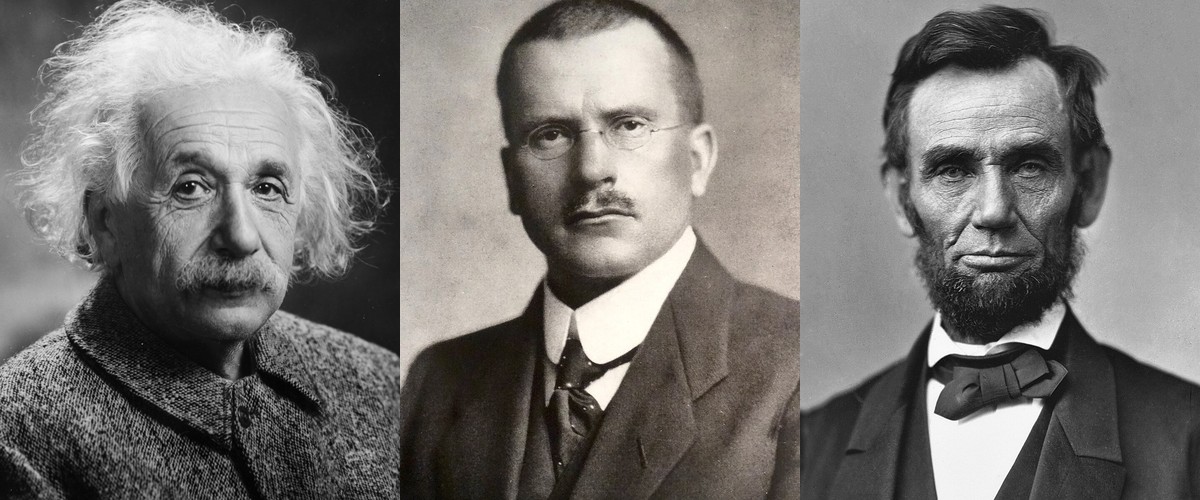
Einstein, Jung, Lincoln — three lives, three birth charts, no biography fed to the instrument.
Here is the test, plainly. Take a person's birth data — nothing else, no name attached in the computation, no story, no hint of who they became. Run it through an instrument that treats the ten planets as ten waves and measures how they interfere. See what comes out. Then, only after, look at the actual, well-documented life and ask: does this fit, or are we imagining it fits?
We did that three times this week. Albert Einstein. Carl Jung. Abraham Lincoln. Three people whose real lives are about as thoroughly documented as a human life can be — no room for vague, flattering guesswork to hide in. Three times, the instrument's own synthesis — sentences it generates from the geometry, before any of us touch it — landed on the single most specific, defining fact of that person's actual life.
This isn't three flattering horoscopes. It's three independent hits, and we can show you the numbers behind each one.
IEinstein — the outlier that shows up twice
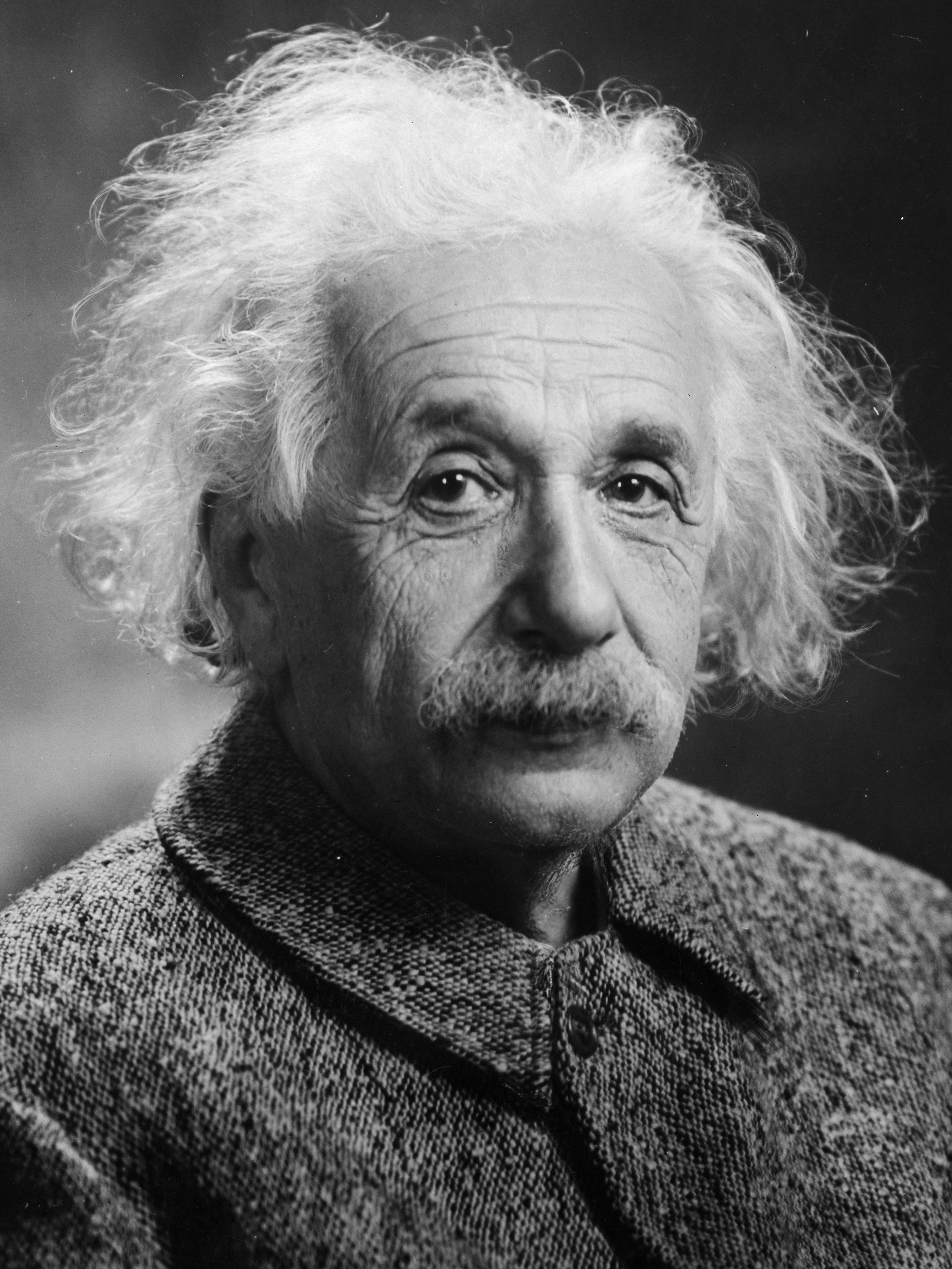
Left: Albert Einstein, public domain (Wikimedia Commons). Right: Einstein's real Scalar Flower breath-field, live and interactive — drag to orbit. Open full-screen ↗
Conventional astrology's version, first — the version most people have actually met. Einstein was a Pisces Sun. The standard keyword list: intuitive, dreamy, compassionate, artistic, escapist, imaginative. Broadly flattering, broadly generic — it's the description on a million calendar horoscopes, true of roughly one-twelfth of everyone born, and it says nothing about a mind that spent decades in structural disagreement with the physics establishment.
What the instrument said, with no name attached
Hub 5.464 — 70th pct Breath 0.262 — 58.8th pct Counter-line: Uranus, −0.892The written reading's synthesis: "A structured mind, guarded by its own doubt." Working from geometry alone, the instrument found Mercury — the faculty of mind — folded most protectively into the center of the field, with Self, Mind, and Structure locked in near-perfect agreement (0.997, 0.996, 0.994). One voice stood apart from all of it: Uranus, at −0.892, nearly the exact opposite pole from everything else.
Then we looked at the breath geometry — a completely different measurement, using planetary latitude instead of longitude, computed by an entirely separate part of the math. Only one planet in Einstein's entire chart sits above the ecliptic plane. It's Uranus.
Two independent measurements, using two different coordinates, both singled out the same single planet as the one that stands apart. That is not the kind of thing that happens by default — it's the kind of thing you check twice before you believe, and we did.
Say what you actually know about Einstein: a man whose entire life's work was rigorous, load-bearing structure — general relativity is, among other things, an argument about how spacetime itself is built — held by someone who spent his later decades in genuine, public disagreement with where his own field was heading (his lifelong discomfort with quantum mechanics: "God does not play dice"). Structure at the center. One voice, apart from the rest, refusing simple agreement. The instrument didn't know his name. It found that shape anyway.
IIJung — the depths, before it knew the man's whole career was about the depths
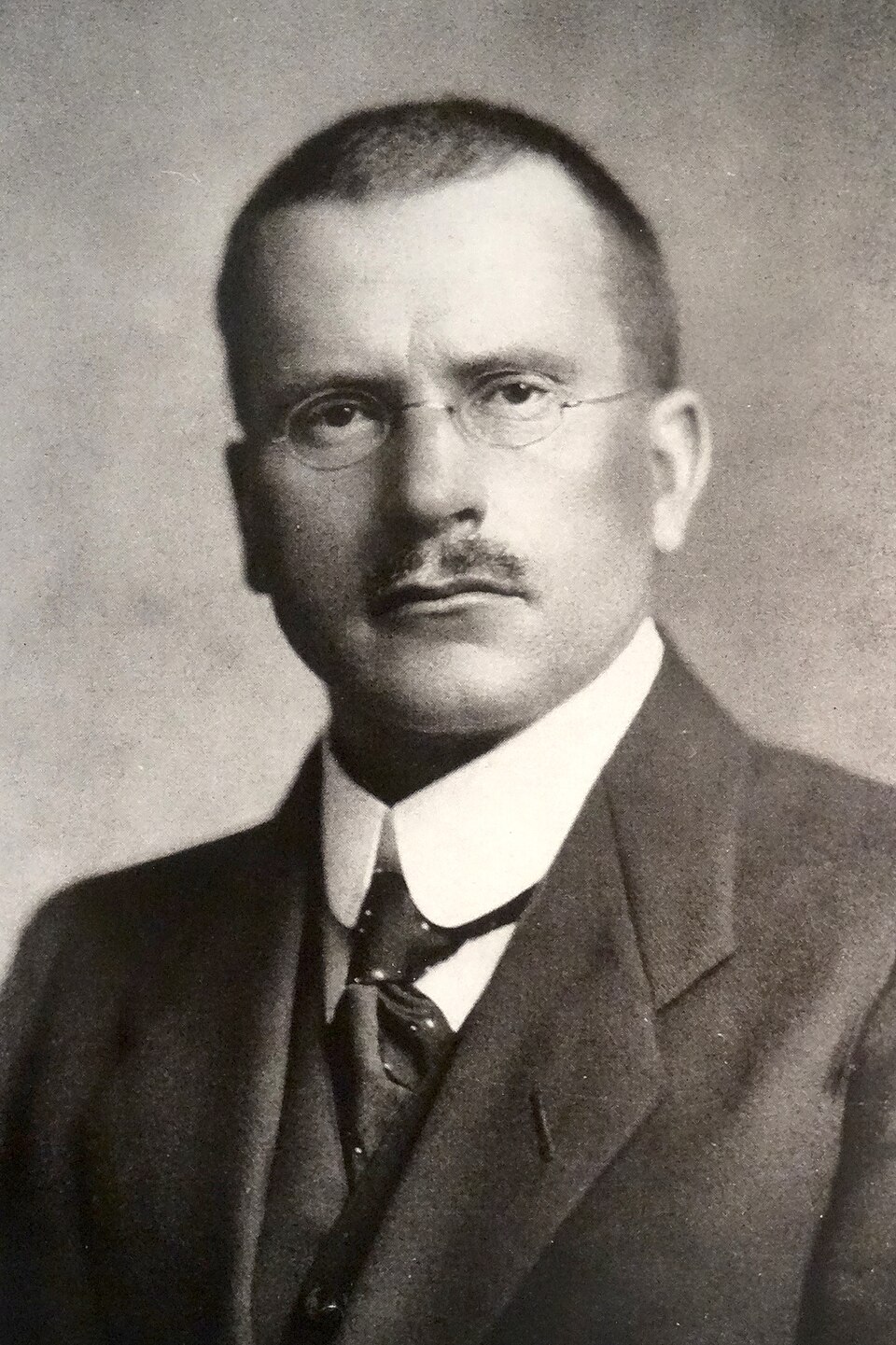
Left: Carl Gustav Jung, public domain (Ortsmuseum Zollikon, via Wikimedia Commons). Right: Jung's real Scalar Flower breath-field, live and interactive — drag to orbit. Open full-screen ↗
Conventional astrology's version, first. Jung was a Leo Sun. The standard keyword list: proud, commanding, natural leader, self-assured, powerful will. Also broadly generic — and notice it points the opposite direction from the man's real legacy: Leo copy leans on visible confidence and command, while Jung's actual contribution was a theory of the buried, invisible, unconscious layer beneath the confident surface.
What the instrument said, with no name attached
Hub 3.554 — 37.3rd pct Breath 0.202 — 41.3rd pct No formal counter-lineThe written reading's synthesis: "A still center, a loud clear mind, and a buried will that keeps every certainty honest." The instrument, before it knew anything else, singled out the Moon — feeling — as the single most deeply held faculty in the entire field. Not intellect. Not the public self. Feeling, buried at the deepest layer the instrument measures.
This is a man who built an entire school of psychology on the premise that the unconscious — the buried, felt, non-rational layer of a person — is the true engine of the self. The instrument arrived at that same claim from ten planetary positions and nothing else.
The breath chart adds the honest, undramatic footnote: Jung's field has the lowest net "lift" of the three, split almost exactly evenly (five planets above the plane, five below), no dominant direction. That maps cleanly onto his own reading's language — a "still point," a field with no strong outward thrust. Structure without force. That's what the numbers show, and it's also, by his own writing, close to how he described his own inner life.
IIILincoln — the feeling that carried the whole field, and sits highest off the plane
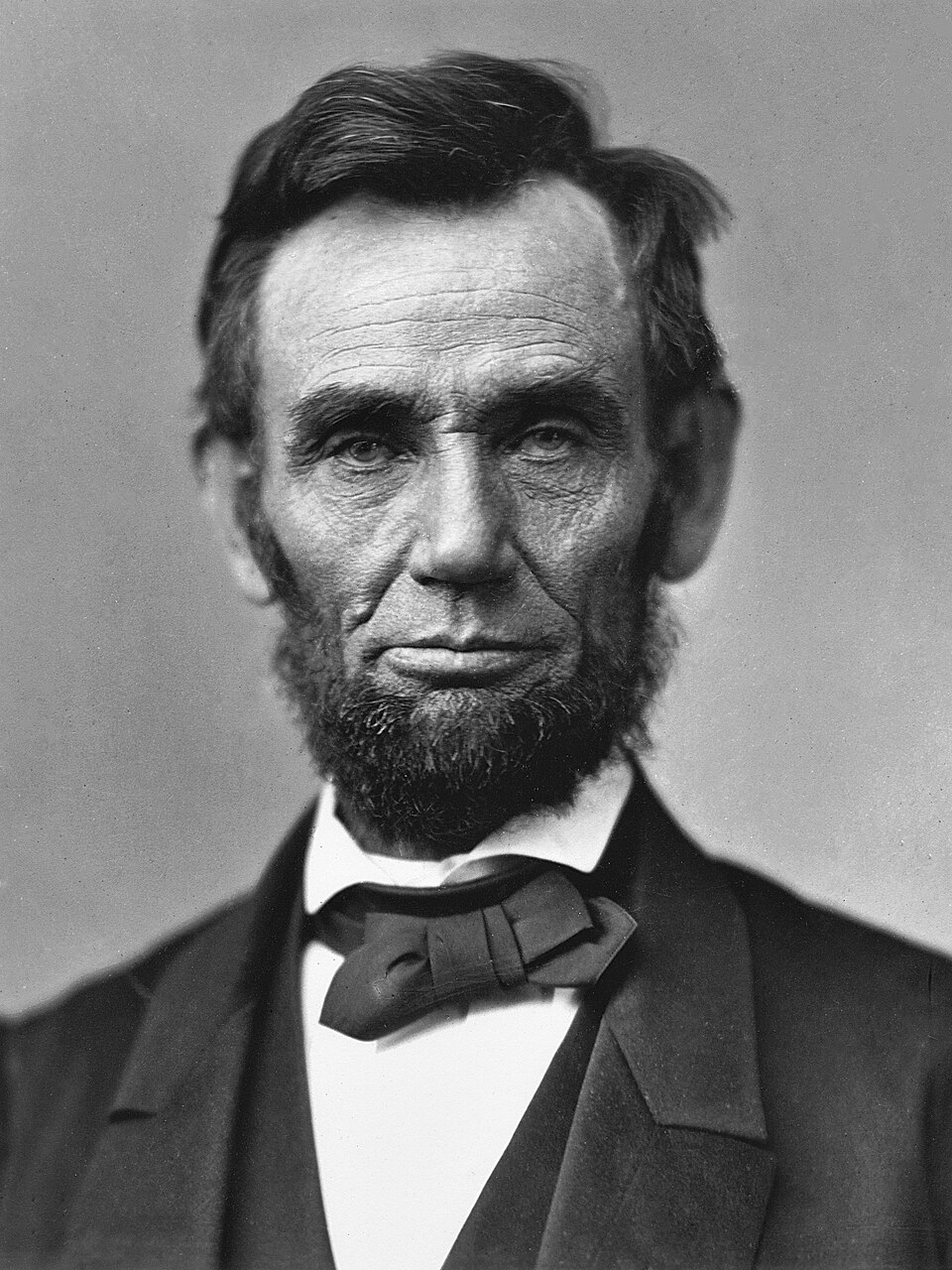
Left: Abraham Lincoln, photographed by Alexander Gardner, November 8, 1863 — public domain (Wikimedia Commons). Right: Lincoln's real Scalar Flower breath-field, live and interactive — drag to orbit. Open full-screen ↗
Conventional astrology's version, first. Lincoln was an Aquarius Sun. The standard keyword list: independent, intellectual, humanitarian, visionary, detached, forward-thinking. This one is closer than the other two — Aquarius copy does gesture at "humanitarian" and "visionary," which fits — but it's still built from one bucket a twelfth of humanity shares, and it says nothing specific about feeling as the load-bearing, dominant faculty underneath a composed public self. "Detached" is, if anything, the opposite of what the real geometry found.
What the instrument said, with no name attached
Hub 5.638 — 72.8th pct Breath 0.297 — 69.2nd pct Moon alignment: 1.0 — the instrument's absolute maximumThe written reading's synthesis: "A gathered field with a quiet, unreadable center, building from a depth it does not show." The instrument found the Moon — feeling — sitting at 1.0, the literal ceiling of what the alignment score can register. Not a quiet undertone. The lead voice, in perfect phase with self and mind.
The breath chart, again a separate calculation: the Moon carries the single highest latitude of any body in Lincoln's entire chart, at +4.97°. The chart with the most lopsided, most dominant "lift" of the three we ran — and the planet driving that lift the hardest is the same one the written reading already called out as maximally aligned, by a completely different piece of math.
What we actually know about Lincoln: a man whose private letters and firsthand accounts from those closest to him describe a deep, often melancholic emotional interior, carried underneath a composed, architectural public style — the man who held the Union together by force of deliberate construction, while privately, famously, grieving hard and often. Feeling leading everything, from underneath a calm surface. The instrument named that before any of us told it who he was.
IVWhy this is worth taking seriously, and exactly how far
We are not going to soften this into a maybe, and we're also not going to pretend all three are equally strong. Three separate people, three separate charts, three separate synthesis passages generated by the instrument with zero biographical context — and three times, the single sentence it produced pointed at the real, defining fact of that person's life: Einstein's structure and disagreement, Jung's depths, Lincoln's buried feeling. Two of those three — Einstein and Lincoln — came wrapped in unusually strong, above-average charts (70th+ percentile hub and breath on both). Jung's came from an ordinary, below-average chart carrying one specific, correct call. Different strength, same direction. We're naming both.
Here is the honest boundary around that claim, stated with the same directness. We chose these three people. We are the ones judging the fit. Three hits, self-selected, is a genuinely strong first showing — it is not yet a measured, blinded hit rate, and we won't call it one before it's earned that. The strongest piece of evidence in this whole piece isn't any single fit — it's that in two of the three charts, two independently computed parts of the same instrument, using different math (longitude-based alignment, and latitude-based "breath"), landed on the exact same planet as the significant one. That kind of internal agreement is much harder to produce by chance than a single flattering sentence is.
This instrument is null for prediction, null for diagnosis, and it does not claim to know what will happen to anyone. What it does claim — and what these three charts back up plainly — is that the shape of a birth sky, read as ten interfering waves, can land on language that fits a real, documented human life closely enough to be worth your attention. We'll keep running more people, and we'll report it exactly this way each time: what the geometry said, what the life actually shows, and where the line between the two sits.
Run your own chart through the same instrument
No name, no story — just your birth data and the geometry. See what it finds.
Get your free reading →