Mercury Retrograde: Disproved in 200 Million Flights — With a Literal Twist
Mercury retrograde isn't ruining your travel plans — we checked, in two hundred million flights. What it's actually doing is quieter, and much stranger: it winds you inward.
A Field Note from Scalar Flower. With computational collaboration by the Hermes agent (Nous Research).
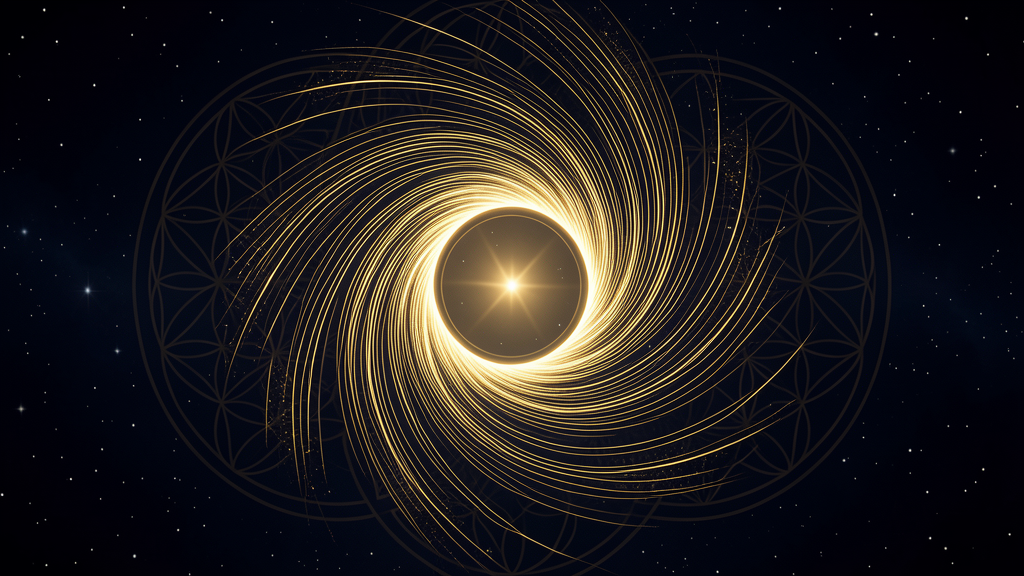
Retrograde doesn't reverse the spin. It winds it tighter — closer to the center.
A few times a year the internet loses its keys, sends the wrong text, misses the flight, and blames the same culprit. Mercury retrograde has become the one piece of astrology even skeptics quote — usually with an eye-roll, sometimes with a nervous glance at the calendar. So we did the thing almost nobody does with it: we tested it. Not the feeling — the actual, checkable claim. And then, when the famous version came back empty, we found something real hiding underneath it that no one was looking at.
Every claim here is tagged, so you always know exactly what you're holding: REAL measured and rerunnable, ARCH true structure or naming, INTERP offered meaning that makes no prediction, and HYP — a possibility we find genuinely exciting and are willing to be wrong about. Watch that last one; it's where we go at the end, on purpose.
We aimed the most famous claim at 200 million flights
If Mercury retrograde disrupts travel, it should show up where travel is measured to the minute. So we took the U.S. Bureau of Transportation's on-time database — 324 months, roughly 200 million flights, 1988 through 2024 — and asked a simple question: do flights run later during Mercury retrograde? REAL
They don't.
Statistical significance: p = 0.83 (a coin flip has more to say).
Effect size: essentially zero.
And this is a clean null — the kind that can say no with authority, not just a weak shrug. We proved the instrument works by feeding it a real effect (it caught it instantly, +3.5 minutes). We ran four fake retrograde windows as decoys — all came back empty too, so there's no hidden artifact tilting the result. REAL The most-quoted claim in popular astrology, tested at the scale of an entire industry, leaves no trace at all. (It's now on our public Verdict Ledger as Test 34.)
“Mercury retrograde disrupts travel” — tested in 200 million flights, and gone.
Here's the part everyone gets wrong anyway
Mercury never actually moves backward. Not a little. Not ever. REAL It's an illusion of perspective — the same one you've seen from a train window when the slower train beside you seems to drift backward. You're passing it. Mercury circles the Sun in 88 days; Earth takes 365. A few times a year the faster inner planet laps us, and for about three weeks it appears to slow, stop, and slide back against the stars. ARCH
So there was never a force to find. The empty result above isn't a surprise or an embarrassment — it's exactly what honest geometry predicts. A viewing angle can't delay a plane.
See it for yourself: the backward motion is two circles, not a reversal
You don't have to take the geometry on faith. Below is your own solar system, rebuilt as a clockwork. Each planet's place in the sky is the sum of exactly two rotating circles — a larger one carrying a smaller one, the ancient deferent and epicycle. Nothing in the machine ever runs backward. Yet watch the pen: as the two circles beat against each other, the traced path curls into a loop, and for a few weeks the planet appears to slide back against the stars. That loop is retrograde. It is drawn by forward motion alone. ARCH
This is not a trick of drawing arbitrary shapes from enough circles — it's the real machinery. A planet's apparent position is its true motion around the Sun minus the Earth's motion around the Sun: two rotations, summed. That is precisely the deferent-and-epicycle model the ancients built, and it happens to be a two-term Fourier series — the same mathematics that reconstructs any waveform from rotating circles. Retrograde was never a planet stopping. It was always us, passing. ARCH
And yet retrograde leaves a real mark — just not where anyone looked
This is where it gets interesting. Retrograde is invisible in the world's events. But in the geometry of your own birth field, it is one of the loudest signals we have ever found. REAL
Our instrument rebuilds your birth moment as a three-dimensional field and measures its winding — whether the whole pattern spirals around its own center into a vortex. When we count how many planets were retrograde at your birth and compare that to the winding, the connection is strong and it holds up:
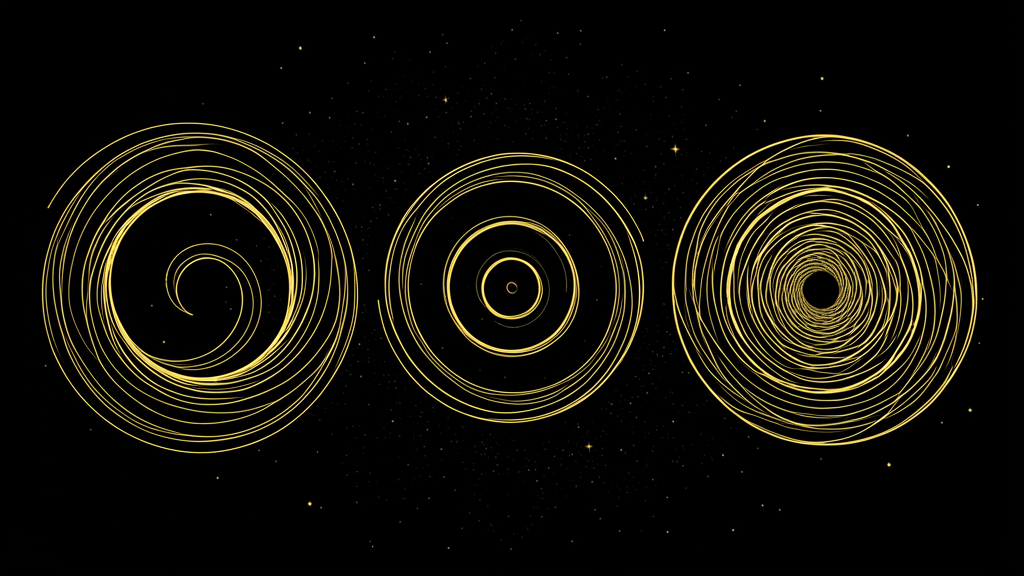
The relationship even survives the obvious objection. A skeptic could say retrograde planets cluster near the Sun, so of course they pile up geometrically — you're just measuring that. We controlled for it, and the connection got stronger, not weaker. REAL It isn't an accident of where retrograde planets sit. Retrograde is a fact about motion; winding is a fact about position; they connect through the real machinery of the solar system, not through a definition chasing its own tail.
Does the vortex spin backward? We looked. No — it winds deeper.
Here was the tempting poetic guess: if the planets appear to reverse, maybe the field's vortex reverses too — spins the other way, an “anti-vortex,” and that backward spin is the friction we feel. We could test it directly, because the winding carries a direction (a spin one way, or the other). REAL
Across 2,500 charts, the vortex never once reversed. The birth field has a preferred handedness — it always winds the same way. What retrograde planets do is not turn the spin around. They tighten it. REAL Not a reversal. A deepening.
(We keep one caveat in the open: we can't yet fully separate “nature only turns one way here” from a convention in how we trace the spiral. That's a question for a dedicated future test — not a settled fact.) ARCH
Crossing into meaning, on purpose
Everything above is measured. Here is where we step — deliberately, with the door clearly marked — from measurement into meaning. HYP
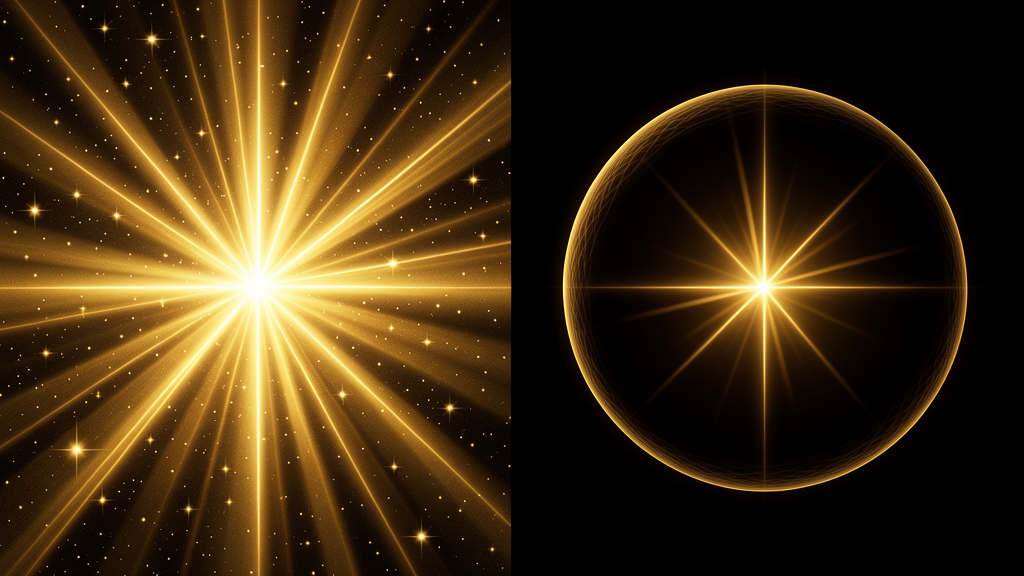
Consider what the word ecstasy actually means: ek-stasis, to stand outside yourself. It's what a healthy body in flow does — it forgets its own edges and pours into the task, the other, the doing. You don't feel your boundaries when things are going well; you feel them when something binds. The body only announces itself — becomes something you're stuck inside — when it's blocked. Standing-outside is flow. Falling back in is friction.
Now hear the tradition's one honest instruction for retrograde, which it has repeated for centuries: go within. Not “the world will break” — you will withdraw. Reconsider. Renegotiate. Redo. Step back from the reflexive merger with the world you'd contracted to live in and optimize.
That is exactly the shape our number found. A retrograde-heavy field is a field wound tighter around its own center — less spread outward, more interior. The measured deepening and the felt “going within” are the same gesture seen from two sides: the soul gaining definition by drawing its edges back home.
The friction people feel in these seasons may not be the world attacking — we've shown the world doesn't move. It may be the felt cost of coming out of ecstasy: no longer pouring seamlessly into things, standing back, feeling your own boundary again. A deepening always carries a gift — a self more defined for having withdrawn to consider — and a price: you feel your edges. This is an invitation, never a forecast. It says nothing about your Tuesday.
It also reframes something worth saying plainly: a deeply-wound chart is not an afflicted one. A birth under many retrogrades — the far end being all the outer planets turned inward at once — isn't a “worse” field. It's a soul built to stand back and consider, structurally interior, less reflexive. Not damaged. Deep. INTERP
What we're really suggesting is this: the tradition felt something true. It was reading a genuine shape — and calling it a cause. The shape is real. The cause was never there.
Retrograde doesn't reverse the world. It winds you inward, toward your own center — where the soul takes on more definition.
The experiment that would prove us wrong
We don't get to keep the exciting part for free. The next step is a fully pre-registered study of retrograde count against field winding — criteria locked before any numbers are computed, a shuffle-null to catch coincidence, a held-out span of sky, and a clean test of whether that handedness can ever flip. We commit in advance to publishing the result either way — including, if that's what the sky says, a null that sends this whole beautiful picture back to the drawing board. That's the deal we make on every claim here. It's the only reason the rest is worth believing.
Read your own field
Curious where your birth field falls — slack and outward, or wound tight and inward? You can see it, on your own chart, computed from the real sky.