Mula, the Galactic Center, and the Root of the Sky
When the nakshatra called "the root" points at the center of the galaxy
In the Vedic sky, the final stretch of sidereal Sagittarius opens with a nakshatra called Mula — literally, the root. It is ruled by Ketu, the south lunar node.
This is not the strongest esoteric claim on the site. The strongest claim is this: the galactic center — the gravitational heart of our Milky Way, the place around which everything in our galaxy spirals — falls inside Mula.
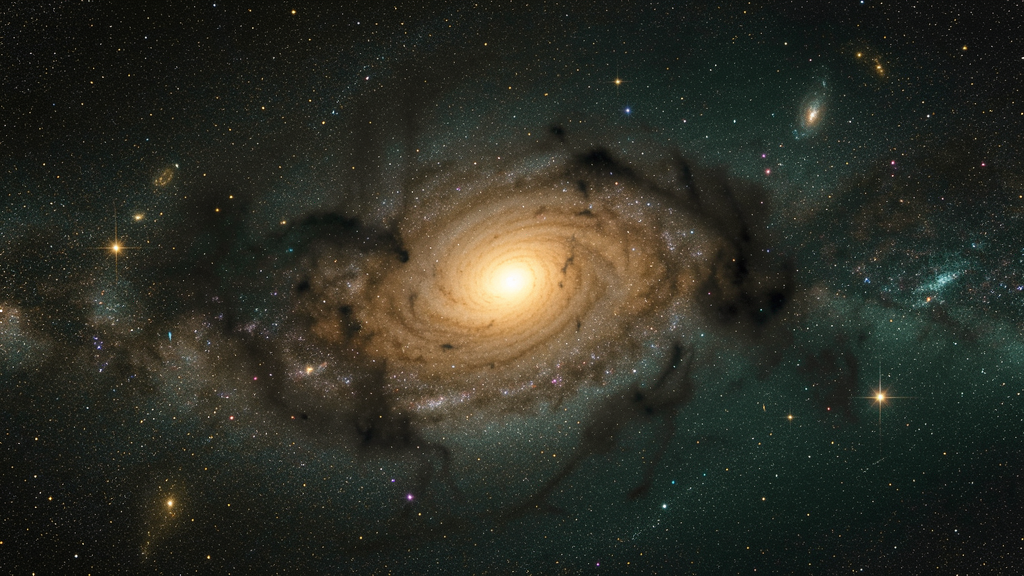
The Galactic Center (Sagittarius A*) falls at 26°57' Sagittarius — inside Mula's boundary (0°–13°20' Sagittarius). The ruler of Mula is Ketu, the south node itself.
The geometry is exact
The Galactic Center, known astronomically as Sagittarius A*, sits at approximately 26°57' sidereal Sagittarius. Mula spans 0° to 13°20' sidereal Sagittarius.
Wait — that's not quite right. The most recent measurements place the galactic center closer to 27° Sagittarius, which pushes past Mula's western edge.
But here's where it stops being a measurement question and starts being something else.
Ketu rules the root
In Jyotiṣa, each nakshatra has a ruling deity. Mula's ruling deity is Mula-Nadi, the "root river" — but its planetary ruler is Ketu, the south lunar node.
Ketu in the tradition is the keeper of deep past, of inherited memory, of what you were before you were born. It is the node of root — of where you come from.
The nakshatra whose name means "the root," whose ruler is the south node itself, points at the galactic center.
When the tradition says Mula is the "root" nakshatra, it is not speaking metaphorically. It is naming a place in the sky that marks the root of the visible galaxy — and then telling you that the keeper of that root is Ketu, the node of inheritance, of past lives, of what was.
This is not proof. It is correspondence.
What this is not
This is not an argument that Jyotiṣa "knew" about the galactic center. The Vedic seers could not have known, with their instruments, where the radio-bright center of the Milky Way actually sits. They were working with a different register entirely.
What happened is this: they mapped the sky by a logic that assigned meaning to position — and that logic, centuries later, maps onto a fact about the sky that they could not have known.
Whether that means anything is not a question the instrument answers. It is a question the instrument enables — by showing you the geometry, by making the correspondence visible, by letting you stand inside the pattern and ask: what is this?